Observational (non-interventional) studies capture what happens in routine clinical care. Patients stay on their usual treatment pathway, and researchers collect outcomes, safety information, and utilisation patterns without assigning an intervention. That’s the key difference from interventional clinical trials, where the protocol actively tests a treatment or procedure.
Because they reflect real practice, observational studies are a core tool for generating real-world data and real-world evidence (RWD/RWE) from sources such as electronic health records and disease registries.
Europe is often selected for observational research when sponsors need credible post-approval evidence across multiple healthcare systems. A European observational CRO helps navigate country-level ethics expectations, operational realities of multi-site projects, and strict data-protection requirements under GDPR for health data.
For medicines, post-authorisation safety studies (PASS) are a recognised mechanism to further understand safety or evaluate risk-management measures after approval, assessed within the EU pharmacovigilance framework.
The right design depends on the question. Registries support long-term follow-up and continuity of patient records. Cohort studies follow patients over time to understand outcomes and care pathways; case-control designs compare exposures or risk factors between groups; post-marketing safety or utilisation studies focus on real-world safety patterns and use; and secondary-data analyses can leverage existing repositories such as EHRs, claims data, or registry datasets.
A good observational program starts with clear objectives and a design that remains truly non-interventional. In the EU, details like how data are collected (for example, direct-to-patient contacts outside routine visits) can affect whether a study is viewed as observational or closer to interventional—so the protocol and data-capture approach matter from the start.
Typical CRO support covers study concept and protocol/CIP development, feasibility and country selection, ethics submissions, site/physician engagement, efficient data-collection workflows (often via validated EDC and, where appropriate, ePRO/eCOA), monitoring and quality oversight, data management and coding, statistical analysis, and final reporting.
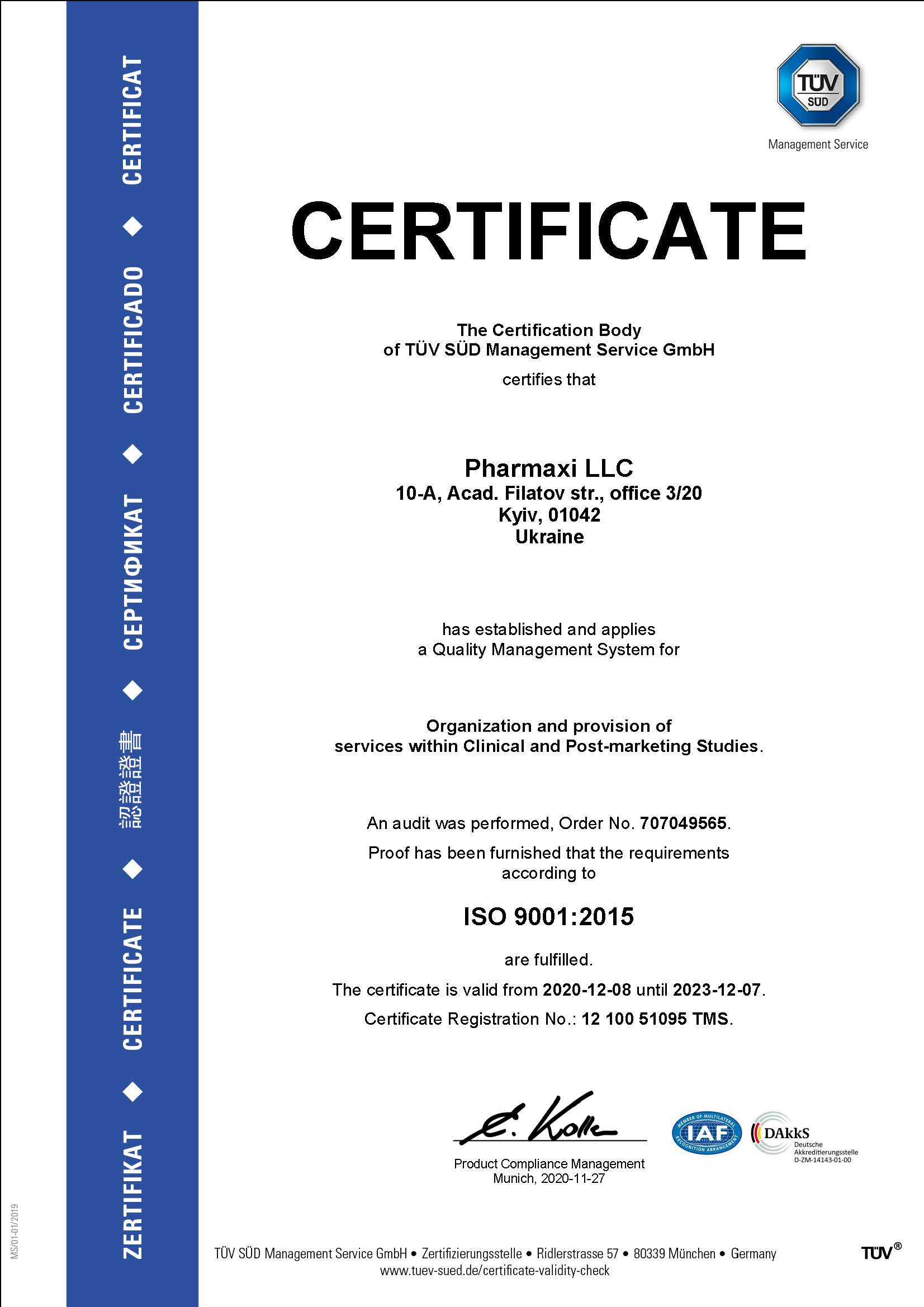
To avoid “over-promising,” here’s what Pharmaxi explicitly supports for observational / non-interventional and post-marketing studies: study design and plan development, site selection and contracting, remote site training, ethics submissions, EDC and ePRO/eCOA setup, on-site and remote monitoring, data cleaning/coding, statistical analysis, and final study report development.
Observational studies help sponsors see performance beyond controlled trial environments: adherence, comorbidities, concomitant therapies, and real-world clinical workflows. They are frequently used to strengthen safety monitoring over time and generate evidence useful for regulators and other stakeholders. In the EU, PASS in particular is intended to generate additional safety information and/or evaluate risk-management measures after a medicine is authorised.
For medical devices, post-market observational studies can also be an efficient way to collect clinical data when it is limited in existing documentation and may be needed to support strengthened claims or lifecycle activities.
Most engagements follow a simple, sponsor-friendly flow: clarify objectives → select design and endpoints → confirm ethics/regulatory pathway by country → engage sites/physicians → implement the data strategy and systems → run quality oversight and monitoring → clean and analyse data → deliver a final report and evidence package.
If the study is large and multi-country, scalability becomes critical: role-based access, streamlined AE reporting, and real-time visibility into recruitment and data quality reduce operational drag. Pharmaxi describes this kind of scale for its late-phase/non-interventional platform use cases (100+ investigators, 5,000+ patients; scalable to larger networks).
European observational research involves special-category health data under GDPR, which requires an appropriate lawful basis and safeguards (for example, strong access control and traceability, and often pseudonymisation for research contexts).
Operationally, this translates into clear data-flow documentation, controlled role permissions, and audit-ready records—so sponsors can defend data integrity during inspections and stakeholder review.
With the right observational research CRO in Europe, sponsors gain reliable RWD/RWE, a clearer picture of safety patterns and outcomes in routine practice, and a documentation package that supports regulatory, scientific, and commercial decision-making. This evidence is especially valuable when you need to demonstrate how a therapy or device performs outside tightly controlled trial settings.
Looking for an observational CRO or a European observational CRO to deliver registries or post-marketing evidence? Talk to Pharmaxi about your objectives, countries, and data strategy and we’ll propose a practical plan for compliant execution across sites and markets.
Over 30 post-market and non-interventional studies delivered – registries, PMSS, IIS, HCP surveys: